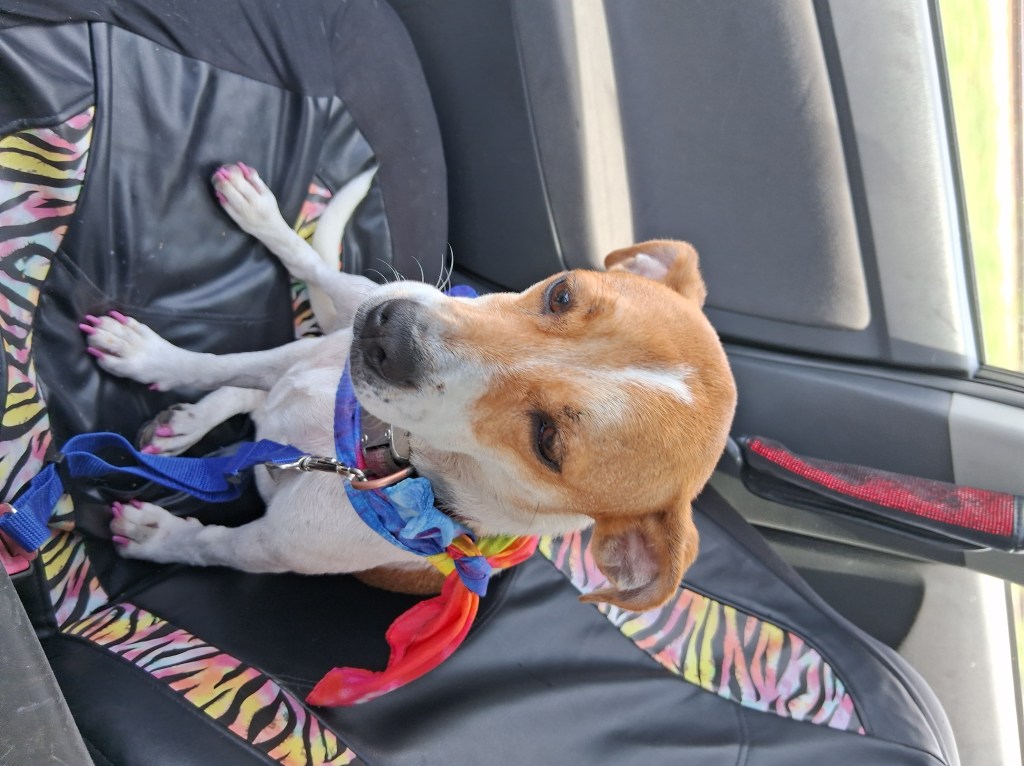
We all have those core childhood memories that quietly dictate who we become as adults. For some, it’s building forts in the woods; for others, it’s baking cookies in the kitchen. But for me? My earliest and fondest memories are all about animals. Growing up alongside a loyal Red Heeler dog and a horse completely shaped how I view the world—and planted the very first seeds for The Pet Student Path.
The Unshakable Bond of a Childhood Dog. If you’ve ever loved a Red Heeler, you know they aren’t just pets—they are brilliant, high-energy shadows that stick by your side through thick and thin.
Growing up with a working breed taught me responsibility before I even knew what the word meant.
They don’t care about a bad day at school or a tough exam; they just want to run, play, and be your most loyal confidant. That kind of unconditional support is something every kid (and every stressed-out college student!) deserves to experience.
Lessons from the Barn: Sharing part of my childhood with a horse taught me a totally different kind of patience and communication. Horses don’t speak human words, but they read your energy instantly. If you’re nervous, they’re nervous. If you’re calm and grounded, they settle down right beside you. Learning how to match that energy and build trust with an animal ten times my size taught me confidence and emotional maturity that I still lean on today.
Why It All Matters Now: Looking back, it makes total sense why I ended up pursuing both my education and a life deeply rooted in animal care. Those early days taught me empathy, discipline, and the pure joy of caring for another living creature.
Our childhood pets and animals leave paw prints (and hoof prints!) on our hearts forever. What was your very first pet or animal memory growing up? Let me know in the comments below!
Bringing home a new puppy is exciting, but potty training can sometimes feel like one of the hardest parts of being a new puppy parent. Between accidents, figuring out when your puppy needs to go, and trying to establish a routine, it can be a lot to keep up with.
The good news? Puppies learn through consistency and repetition. Having a simple schedule can make the process much easier for both you and your puppy.
In this guide, we’re going to go over when your puppy should go outside, what to do when accidents happen, how to build a routine, and a simple potty-training schedule you can actually follow.
Take your puppy out:
First thing in the morning
After eating
After drinking a lot of water
After naps
After playing
Before bedtime
When you notice signs they need to go
Just like toddlers, young puppies literally lack the physical bladder capacity and muscle control to “hold it” for long stretches, no matter how badly they want to please you.
Because of that biological reality, a reliable schedule is an absolute game-changer for potty training. It takes the guesswork out of the process for both of you and helps prevent accidents before they happen.
For example:
Time
What to Do
6:30 AM
Wake up → potty outside
7:00 AM
Breakfast → potty afterward
8:00 AM
Potty break
10:00 AM
Potty break
12:00 PM
Lunch → potty afterward
2:00 PM
Potty break
4:00 PM
Potty break/playtime
6:00 PM
Dinner → potty afterward
7:00 PM
Potty break
9:00 PM
Final potty break
10:00 PM
Bedtime
This is only a starting point. Every puppy is different. Younger puppies may need to go out more frequently, while older puppies can gradually hold it longer.
🚨 Signs Your Puppy Needs to Go
Your puppy might:
Sniff the floor
Circle around
Wander away from the room
Become restless
Whine or pace
Head toward the door
Suddenly stop playing
When you notice these signs, take them outside right away.
Potty → praise → reward → back inside
Keep the praise calm and immediate so the puppy connects the reward with the behavior.
💩 What If Your Puppy Has an Accident?
Don’t shame or punish the puppy.
Instead:
Calmly interrupt if you catch them in the act.
Take them outside.
Clean the area thoroughly.
Pay attention to what happened right before the accident.
Adjust your schedule if necessary.
An accident doesn’t mean your puppy is failing. It means they’re still learning.
🐾 Puppy Potty Training by Age
8–10 weeks: Very frequent potty trips and lots of supervision.
10–12 weeks: Continue frequent trips while beginning to recognize patterns.
3–4 months: Your puppy may gradually be able to wait longer between bathroom breaks.
4–6 months: Continue reinforcing the routine and rewarding successful potty trips.
When teaching a puppy how to go outside, you can’t rely on age alone because every dog develops at their own unique pace. Several key variables shift how often a puppy actually needs to empty their bladder:
Breed and Size: Tiny breeds like Chihuahuas or Yorkshire Terriers have remarkably small bladders and lightning-fast metabolisms compared to larger breeds like Labs or German Shepherds. Small dogs physically need to go out much more frequently.
Individual Development: Just like human toddlers, some puppies mature faster physically and neurologically than others, meaning bladder control clicks for them sooner.
Health and Hydration: Active, playful pups who drink a lot of water throughout the day will need to relieve themselves much more often than a quieter pup. Additionally, medical factors like a minor urinary tract infection can cause sudden urgency.
Routine Consistency: A structured schedule—taking them out immediately after waking up, right after eating or drinking, and following intense play sessions—teaches their body a predictable rhythm and drastically reduces indoor accidents.
7 Day Potty Training Routine
Day 1: Establish the schedule Day 2: Watch for potty signals Day 3: Practice going to the same potty area Day 4: Reinforce successful trips Day 5: Reduce unnecessary distractions Day 6: Practice consistency Day 7: Review what is working
Bringing home a puppy involves more than just potty training! If you’re preparing for your first puppy, check out my guide on
Potty training a puppy can definitely take patience, consistency, and a little trial and error, but you don’t have to figure it all out at once. Every puppy learns at their own pace, and accidents are a normal part of the process.
The most important thing is to create a routine your puppy can understand, pay attention to their potty signals, celebrate their successes, and stay consistent. Before you know it, those frequent trips outside will become part of your puppy’s everyday routine.
Remember, potty training isn’t about being perfect—it’s about making progress one day at a time. 💕 Keep your expectations realistic, be patient with your puppy, and don’t get discouraged by the occasional accident.
🐶 Ready to Make Potty Training Easier?
Don’t forget to grab your FREE Puppy Potty Training Printable! Use the daily schedule and 7-day progress tracker to keep track of potty breaks, successes, accidents, and your puppy’s progress.
And if you’re getting ready for a new puppy, be sure to check out my other puppy-care guides for more tips to help you feel prepared for every step of the journey.
Happy training, and remember: small steps today can lead to big progress tomorrow! 🐾
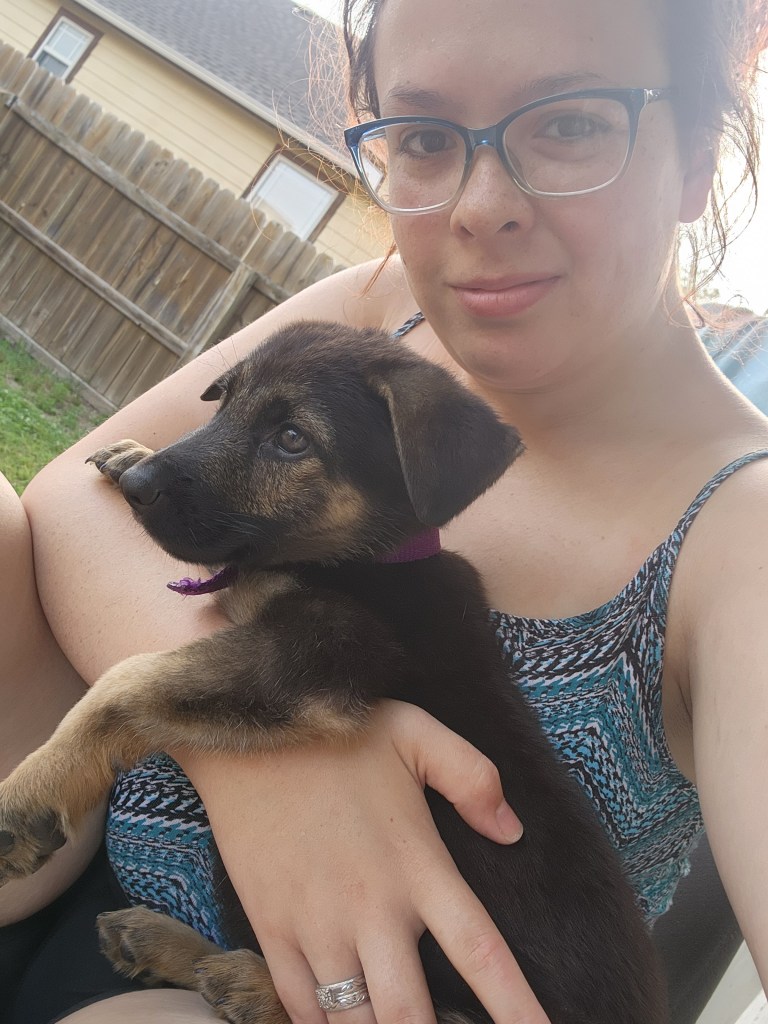
Bringing your puppy home is one of the most exciting moments you’ll ever experience as a dog owner. It’s the beginning of a lifelong friendship, but it can also be overwhelming for both you and your puppy. Everything around them is new- the sights, sounds, smells, and people. Your goal on the first day isn’t to teach your puppy everything. Instead, it’s to help them feel safe, loved, and comfortable in their new home.
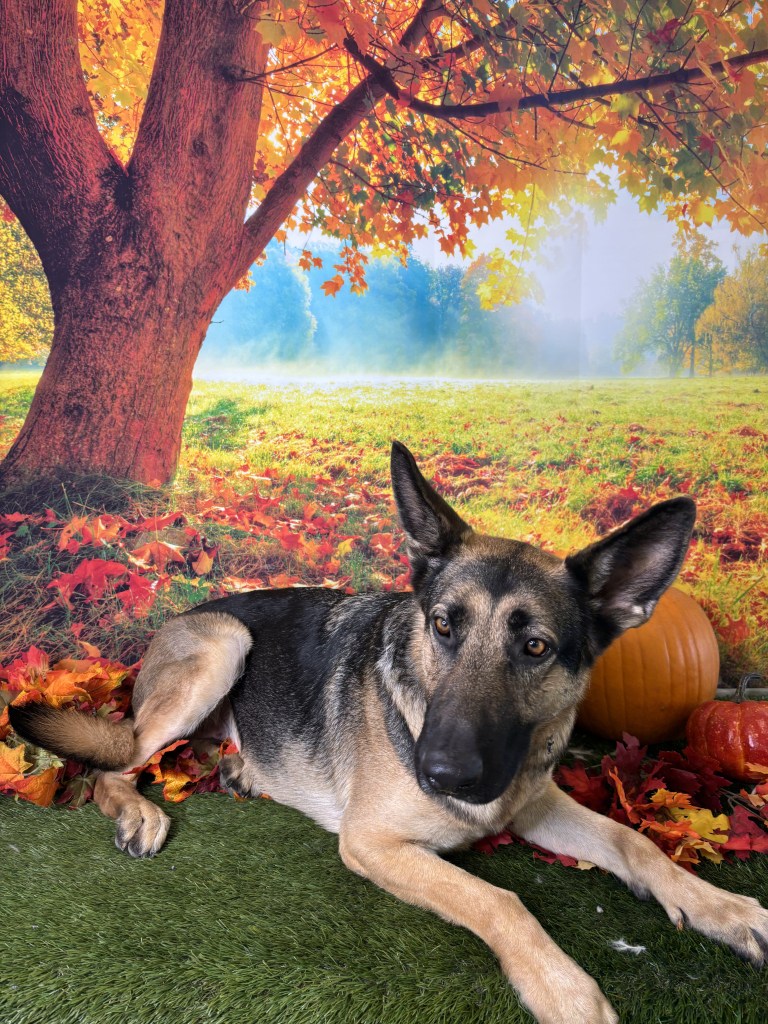
Athena and I 3 years ago
Before You Bring Your Puppy Home
Puppy-Proof your home.
Set up a crate or sleeping area.
Have food, water, toys, a leash, collar, and potty supplies ready.
Decide where your puppy will sleep.
The Car Ride Home
Stay Calm and speak softly
Use a secured crate or puppy seatbelt
Expect nervousness or whining
Bring paper towels just in case of accidents
The First Hour at Home
Let your puppy explore one room at a time.
Introduce family members calmly.
Offer fresh water.
Take them outside immediately to potty.
Feeding Time
Feed the same food the breeder or shelter has been using.
Avoid changing foods right away.
Keep meals small and on a schedule.
First Night
Expect some crying
Keep the crate nearby so your puppy feels secure.
Take them outside if they wake up needing to potty.
Stay Patient___this is a big adjustment.
Completely Normal things
Sleeping a lot
Whinning
Having an accident
Being shy or hiding
Not eating much the first day
Final Thoughts
Remember, your puppy doesn’t need a perfect first day; they need a patient, loving home. Building trust takes time, and every positive interaction helps them feel more secure. The first day is just the beginning of a lifelong friendship. Now, if you don’t think you can fully commit to potty training or crate training for whatever reason, there are ways around this, like seeing if there is a daycare nearby that offers training or a trainer who could help you out.
Common Mistakes to avoid:
Introducing your puppy to everyone on the first day
Letting them roam the whole house immediately
Buying a different puppy food before bringing them home
Skipping potty breaks because they’re excited
Expecting them to sleep through the night
Punishing accidents (Could set you back)
Vet Tech Student Tip:
One thing I’m learning is that puppies thrive on routine. Even on the first day, consistent feeding, potty breaks, and bedtime help them feel more secure in their new environment.
Call to action:
What was your puppy like on their first day home? More Checklists to come. I’d love to hear your story in the comments!!
When I first started this blog, I wasn’t thinking about page views, followers, or making money. I simply wanted a place where I could share what I was learning about dogs, pet care, and my journey toward becoming a veterinary technician.
What I didn’t expect was how much writing would change me.
This blog has slowly become one of the best habits I’ve ever built. Instead of scrolling through my phone for hours, I’ve started spending my free time learning, writing, researching, and creating something that can help other people. Every article I publish feels like another step toward the future I’m working so hard to build.
It Gives Me Something to Work Toward
Having a blog means I wake up with something exciting to build.
Every article teaches me something new. Whether I’m researching puppy care, writing about dog training, or sharing my own experiences, I’m constantly learning along the way.
Little by little, I’m creating a library of information that can help new pet owners while helping me become more knowledgeable as a future veterinary professional.
It Keeps Me Learning
One of my favorite parts of blogging is that I never stop learning.
Before I write about a topic, I spend time reading, comparing information, and making sure I understand it. That process has helped me become more confident and has made me realize how much I enjoy teaching others.
The more I learn, the more I have to share.
It’s Building My Future
This blog is more than a hobby.
My dream is for The Pet Student Path to become a trusted resource for pet owners and veterinary students. One day, I’d love for it to help support me financially through digital products, affiliate links, and resources that genuinely make life easier for pet owners.
Even if that takes years, every article I publish is another brick in that foundation.
The Hardest Part
I’ll be honest—there are days when I don’t feel like writing.
Some days I’m tired after work or school. Other days, I wonder if anyone is even reading what I write.
But then I remind myself that every successful website started with one article, one reader, and one person who refused to quit.
That’s enough motivation for me to keep going.
What This Habit Has Taught Me
Starting this blog has taught me that small, consistent actions matter more than waiting for the perfect moment.
One article at a time has become a website.
One idea at a time has become a growing collection of resources.
One habit at a time is helping me build the future I’ve dreamed about.
Conclusion
I don’t know exactly where this blog will take me.
Maybe one day it’ll become my full-time business. Maybe it’ll simply help thousands of pet owners care for their animals better.
Either way, I’m grateful I started.
Building this blog has become one of the best habits of my life because every time I sit down to write, I’m investing in my future—and hopefully making someone else’s journey with their pet a little easier.
What’s one habit you’ve started that has made your life better? I’d love to hear your story in the comments below!
Everything you need to know before bringing your puppy home and through the first seven days.
The day I brought home my first puppy, I was excited-but I was also nervous. I wondered whether I had everything I needed and was ready for such a big responsibility. I also had no idea where to begin and just went for it blindly. If you’re bringing home a puppy for the first time, you’re probably feeling the same way. This guide will walk you through what to expect during your puppy’s first week.
Before you Bring Your Puppy Home:
Before moving on to Day 1, download my free Puppy Essentials Checklist to make sure you have everything ready before bringing your new best friend home.
After gathering everything on your puppy shopping checklist, take a walk through your home and look at it from your puppy’s perspective. Puppies are curious and love to explore with their mouths, so now is the perfect time to puppy-proof your home. Put away anything you don’t want your puppy chewing on, such as electrical cords, shoes, cleaning supplies, or anything small they could swallow.
Next, decide where your puppy’s space will be. Set up their crate or kennel in a quiet area where they can rest and feel safe. Place their bed, toys, food and water bowls, and a few comfort items nearby. Having everything ready before your puppy comes home will help you both settle into your new routine much more easily.
Vet Tech Tip:
Keep a notebook or use your phone to write down how much your puppy eats, drinks, and goes potty during the first week. These notes can be very helpful if you need to talk with your veterinarian about your puppy’s health or routine.
Set up Your Puppy’s Space:
Before bringing your puppy home, choose a quiet area where they can feel safe and comfortable. This space should include their crate or kennel, a cozy bed or blanket, food and water bowls, and a few toys.
Keeping everything in one place helps your puppy adjust to their new home and gives them a space where they can rest when they feel tired or overwhelmed. As they become more comfortable, they’ll naturally begin exploring the rest of your home.
Pet Student Tip:
Choose a crate that’s the right size for your puppy, or use a divider if they’re still growing. A crate that’s too large can make potty training more difficult.
Your First Vet Visit:
Before your puppy comes home, it’s a good idea to find a veterinarian if you haven’t already. Many clinics book appointments several days in advance, so scheduling early means you’ll have a checkup ready if your puppy needs one. Your veterinarian can answer questions, review vaccination records, and help you create a plan for keeping your puppy healthy.
Pet Student Tip:
Keep your breeder’s or shelter’s paperwork in one folder. Bring vaccination records, medical history, and any questions you have to your puppy’s first appointment.
Get Ready for the First Night
The first night with your puppy may not go exactly as you imagine, and that’s completely normal. Your puppy has just left everything they’ve known, so they may feel nervous, lonely, or confused. Try to stay patient and give them plenty of reassurance.
Have their sleeping area ready with a cozy bed or crate, fresh water, and a favorite toy or blanket if they have one. Stick to a calm evening routine, avoid too much excitement, and give your puppy time to settle in before bedtime.
Pet Student Tip:
Don’t expect a perfect night’s sleep. Many puppies will cry or wake up during the night at first. Staying calm, offering comfort, and taking them outside for potty breaks when needed will help them adjust much faster.
Coming Next: Day 1- Bringing Your Puppy Home
We’ll cover the car ride home, introducing your puppy to their new space, the first potty break, meals, and making their first day as stress-free as possible.
Common Mistakes to Avoid Before Bringing Your Puppy Home:
It’s easy to get caught up in the excitement of bringing home a new puppy, but a little preparation goes a long way. Avoid buying too many toys at first, changing foods immediately, or leaving your puppy alone for long periods on the first day. Keeping things simple and sticking to a routine will help your puppy feel more secure.
Remember, Every Puppy is Different:
Every puppy adjusts at their own pace. Some puppies will walk into their new home full of confidence, while others may be shy or nervous. Don’t compare your puppy to someone else’s. Give them time, be patient, and celebrate the little victories.
Before you leave to Pick Up Your Puppy:
Before heading out, double-check that you have everything you’ll need. Bring a leash, collar, a few paper towels for accidents, a small bowl and water, and any paperwork from the breeder or shelter. If someone is going with you, one person can drive while the other helps keep the puppy calm.
Bringing home a puppy is the beginning of an unforgettable adventure. There will be exciting moments, challenging moments, and plenty of memories along the way. The preparation you do today will make tomorrow much smoother for both you and your new best friend.
Thank you for reading with me! I’d love to hear more from you. Every puppy owner’s journey is different.
What advice would you give someone bringing home their first puppy? Is there a puppy topic you’d like me to cover next? Leave your ideas in the comments-I may feature them in a future article.
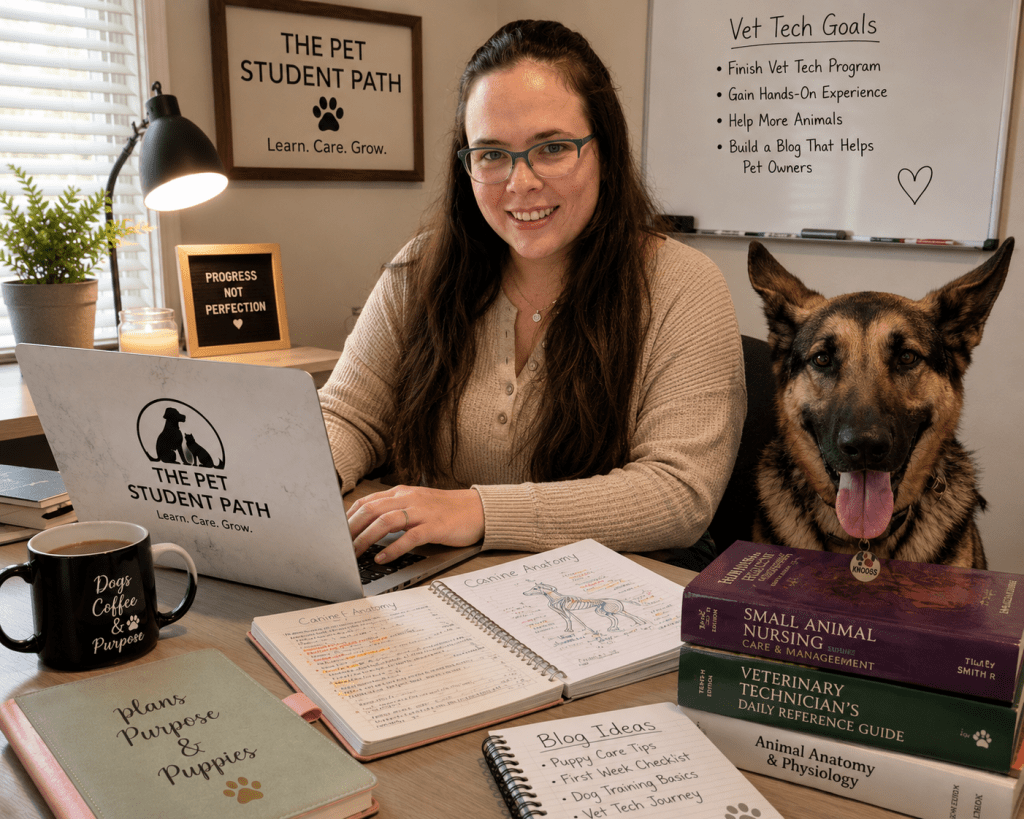
Welcome to The Pet Student Path! I’m so glad you’re here. This blog is a place where I’ll share what I’m learning about pet care, dog training, and my journey through veterinary technician school.
Why I started This Blog
Ever since I wass young, I’ve loved animals and wanted to make a difference in their lives. Working with dogs every day has shown me how important good training, proper care, and reliable information are. I created The Pet Student Path to share what I’m learning and help other pet owners feel more confident caring for their pets.
What you’ll find here:
Dog Training Tips
Pet Care guides
My Journey through Vet Tech School
Product reviews and Recommendations
Helpful resources for new pet owners
Stories from working with dogs every day
Join Me on This Journey
Whether you’re a first-time pet owner, a lifelong dog lover, or someone interested in veterinary medicine, I’m so glad you’re here. I hope you’ll follow along as I continue learning and sharing everything I discover about caring for pets.
Thank you for visiting The Pet Student Path. I can’t wait to share this journey with you!
I’d love to hear from you!
What inspired you to become a pet owner or work with animals? Let me know in the comments below!